
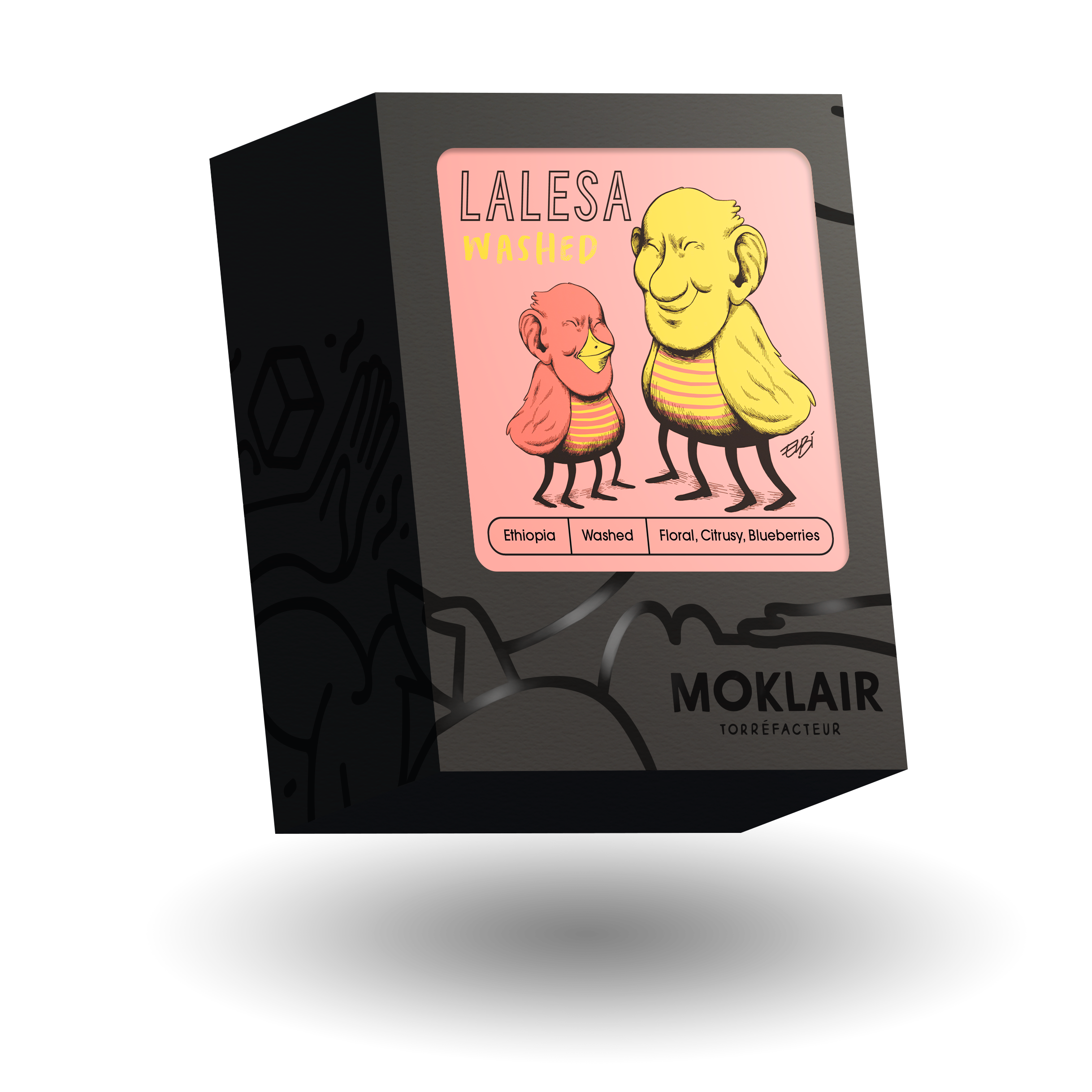
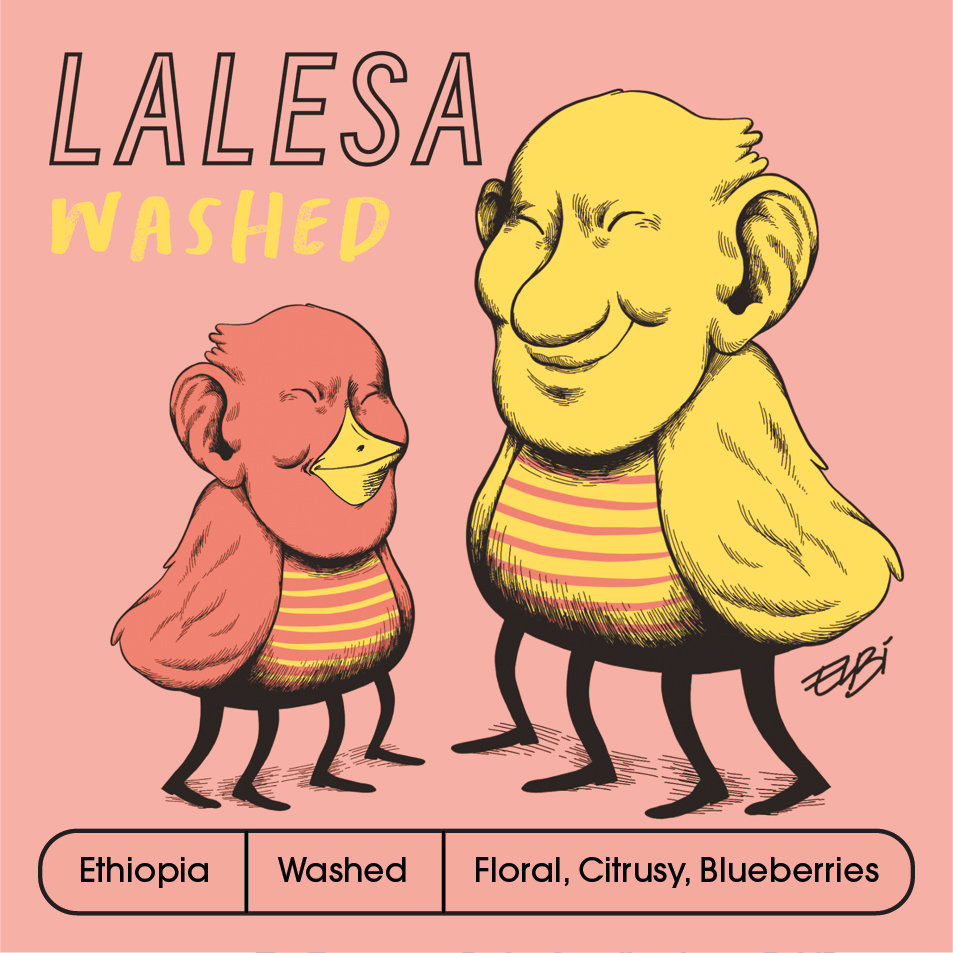
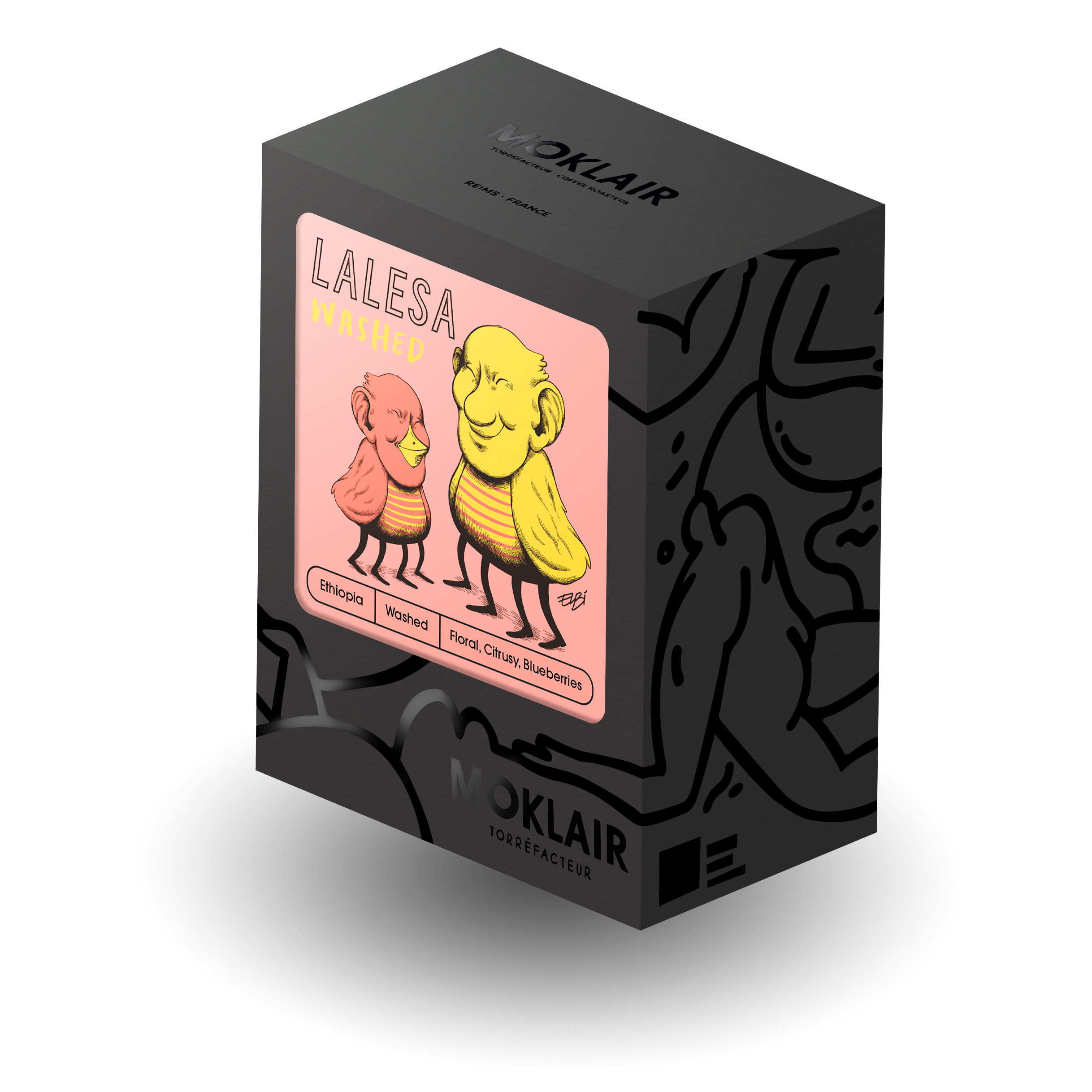
LALESA WASHED
Black tea & bergamot, peach tarte Tatin with a big caramel note, light florals, and a pineapple-like acidity. Juicy and comforting.
Total: 19,00 €
FOR: Espresso & Filter
SCA SCORE: 87.5
MOKLAIR RANKING: Grand Cru
TRACEABILITY: Lalesa Washing Station, Gedeb, Southern Ethiopia, 2200m
PRODUCERS: Gotiti smallholders
FLAVOR PROFILE: Black tea, bergamot, Tarte tatin (peach & caramel), some florals notes
BODY: Juicy
ACIDITY: Medium
PROCESS: Washed
VARIETIES: “Heirloom”
More +
The Lalesa washing and drying station is located in Gedeb, on the highlands of southern Ethiopia, at the heart of a region home to more than 300,000 people. Gedeoiniya is the language that structures everyday life. The Siqe River forms a natural boundary between the Gedeo, Guji, and Southern Oromia zones, shaping a transitional landscape where coffee finds a distinctive expression.
Coffee at Lalesa grows naturally under shade, mainly beneath large enset trees (“fake” banana tree). The best cherries are selected from nearby smallholders through a direct and long-term relationship. After harvest, the cherries are floated in water to remove defective beans, then dried on African beds for 12 to 15 days, until they reach their point of balance. Final green bean sorting is carried out by women from the local community, with great precision.
Once stabilized, the coffee is transported to Addis Ababa, where it is stored at Moplaco in Gerji, before being shipped by train to the port of Djibouti. From there, it leaves Ethiopia, heading to the Netherlands and then to us.
The project led by Ephtah Specialty Coffee is rooted in a concrete social and environmental approach. Producers receive an initial payment upon delivery, complemented by quality premiums, a second payment, and support for school fees.
Future investments aim to strengthen this dynamic: the construction of a water tank for flotation, an increase in the number of drying beds, the development of the Ama Commitment program, and agricultural diversification to support local markets.
This year, financial conditions have been more challenging, due to measures implemented by the National Bank of Ethiopia to control inflation. Despite these constraints, Ephtah remains committed to long-term investment, structuring processing tools, and sustainably supporting producers.
Harvest: December 2025
| Weight | N/A |
|---|---|
| Grind | Ground Filter, Whole beans |
| Roast | Filter, Omni roast (light espresso & Filter) |
| Weight | 100g, 1kg, 250g |
| Mode | dark |
| Image | https://moklair.fr/wp-content/uploads/2025/10/Template-fondproduit-Moklair_LalesaWashed-scaled.png |
| Couleur | #7f5951 |
In the same category