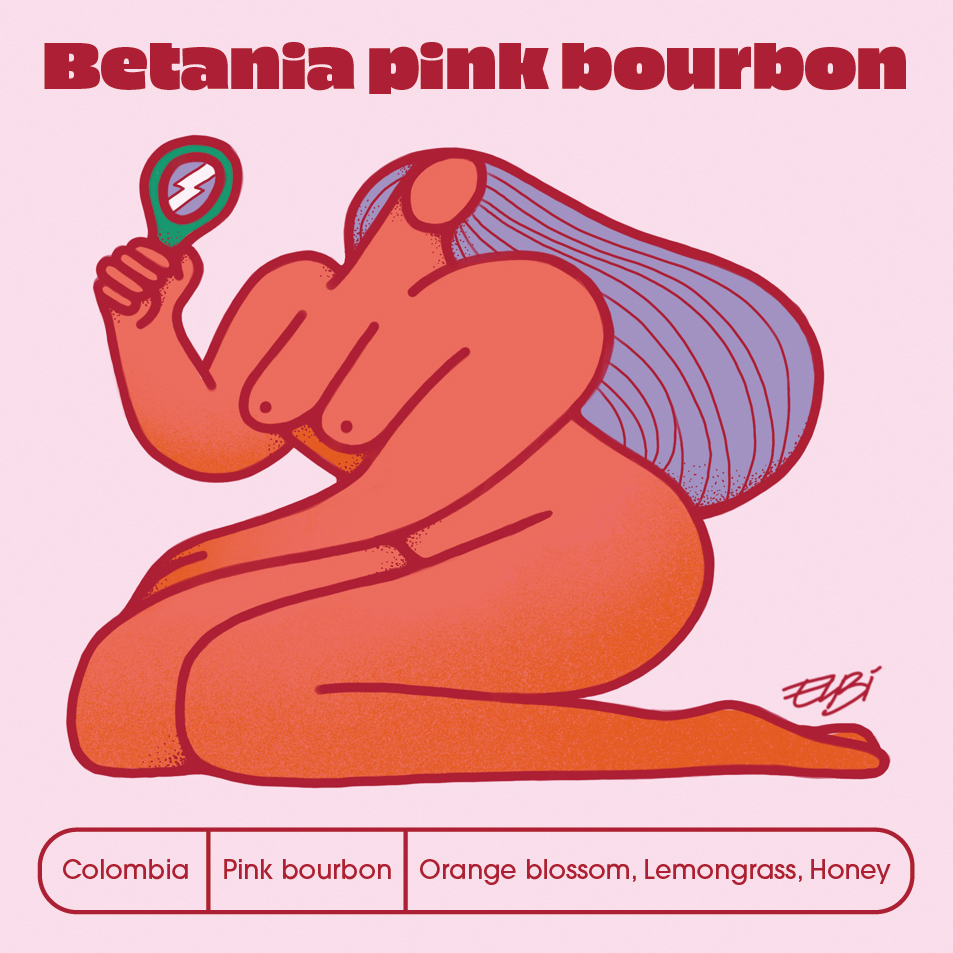
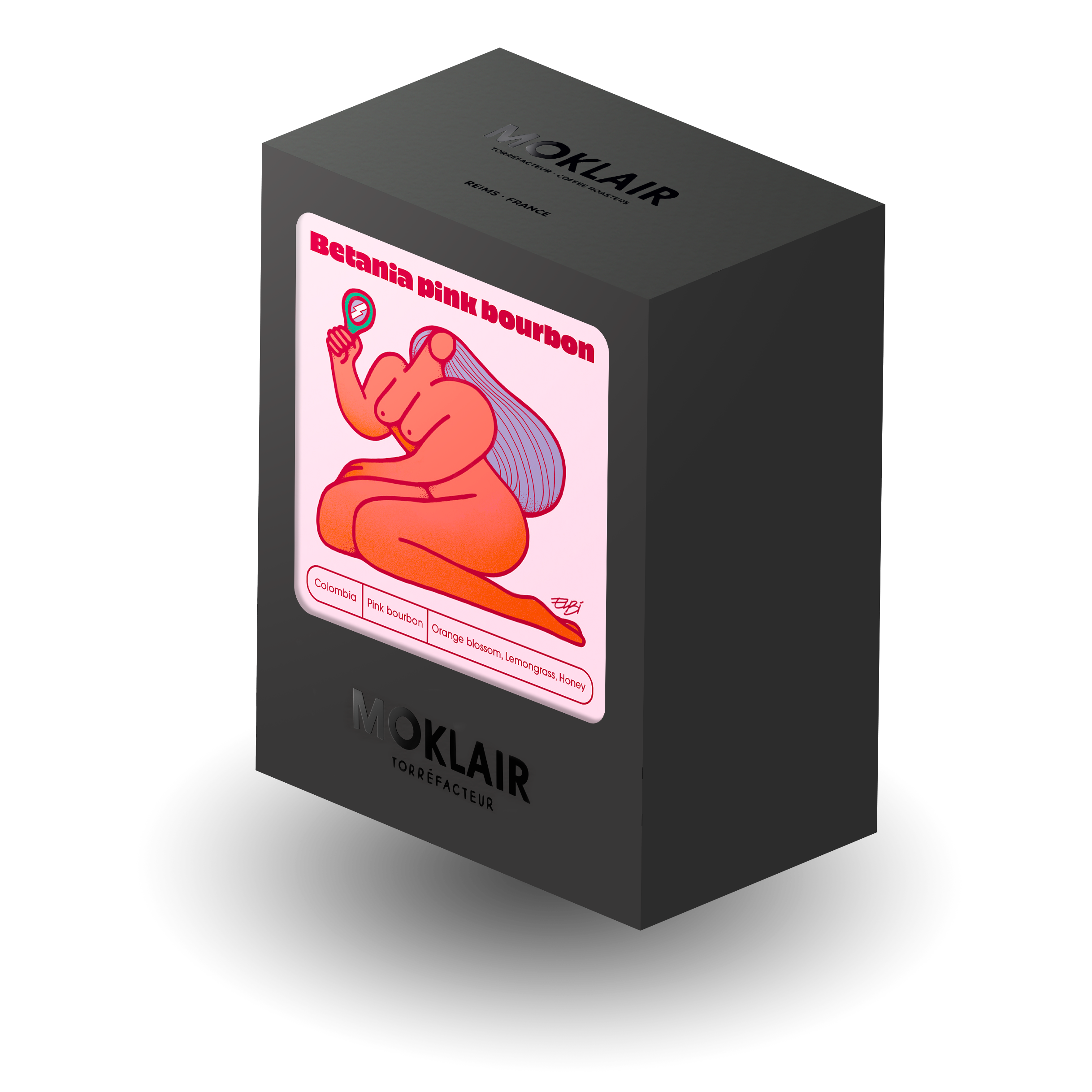
BETANIA PINK BOURBON
A delicate and subtly spiced coffee, led by vibrant lemongrass, with hints of orange blossom and a soft honey sweetness.
Total: 22,50 €
FOR: Espresso & Filter
SCA SCORE: 88
MOKLAIR CLASSIFICATION: Grand Cru
TRACEABILITY: Betania Farm, Palestina, Colombia
PRODUCER: Linarco Rodriguez
TASTING NOTES: A delicate coffee with subtle spice, led by vibrant lemongrass notes, hints of orange blossom and a gentle honey sweetness.
BODY: Silky and juicy
ACIDITY: Medium
PROCESS: Anaerobic washed
VARIETY: Pink Bourbon
HARVEST: 2026
Learn more +
Betania Farm, Palestina, Huila, Colombia
Located at 2,000 metres above sea level in Palestina, Huila, Betania Farm is part of a network of 117 smallholder producers working together to reveal the exceptional potential of southern Huila. Their approach combines respect for the land and traditional farming methods with a strong focus on quality, traceability and environmental stewardship.
The producers have access to specialised shared facilities, including a cupping laboratory, professional drying stations and centralised warehouses. These facilities make it possible to monitor every stage of production while ensuring full coffee traceability.
At the heart of Betania Farm is Linarco Rodriguez, affectionately known as “Don Lino”. With extensive agricultural experience and a constant drive to innovate, he has introduced improvements in cherry selection, fermentation control and drying techniques. His commitment also extends beyond the farm: he supports young producers and encourages more environmentally responsible farming practices.
This lot is made up of Pink Bourbon, a variety known for its elegant and complex aromatic potential. The high-altitude terroir, careful harvesting and precise processing come together to offer a delicate and refined expression of Huila.
Fermentation & Processing
Anaerobic Washed
Only fully ripe cherries are hand-picked to ensure consistent sugar content and optimal flavour development. They are then floated to remove underripe or damaged fruit, leaving only the healthiest and densest cherries.
After sorting, the cherries are pulped in controlled tanks, leaving the parchment coated in mucilage for fermentation.
The coffee then undergoes 32 hours of anaerobic fermentation in sealed tanks. By limiting exposure to oxygen, this slow and even fermentation encourages sweetness and structure while preserving a clean, refined flavour profile.
After fermentation, the coffee is washed and transferred to raised drying beds, where it dries slowly for approximately 25 days until it reaches a moisture content of 10 to 11%. This gradual drying helps preserve acidity, develop sweetness and ensure even, stable dehydration.
Once dried, the coffee is carefully stored under controlled conditions to stabilise before hulling and preparation for export.
The result is a clean, silky and delicately complex coffee, combining lemongrass and bright citrus with notes of orange blossom, honey-like sweetness and a subtle hint of cocoa.
| Weight | N/A |
|---|---|
| Grind | Ground Filter, Whole beans |
| Roast | Filter, Omni roast (light espresso & Filter) |
| Weight | 100g, 1kg, 250g |
| Mode | dark |
| Image | https://moklair.fr/wp-content/uploads/2026/10/Template-fondproduit-Moklair_BETANIAPINKBOURBON-scaled.png |
| Couleur | #7d6f76 |
In the same category